
Bias 2: Acquiescence
Market Research • Apr 20, 2026 12:29:59 PM • Written by: Joe Corace
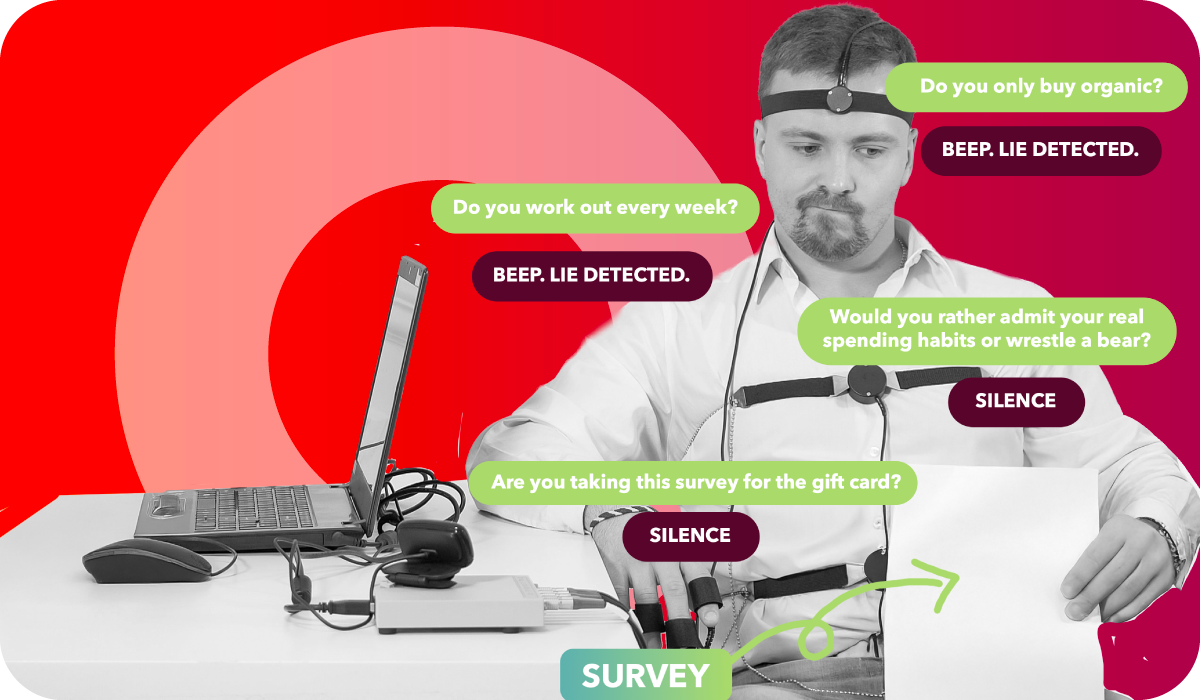
You ran the survey, and eighty percent of respondents said they loved the idea for a new feature to streamline services. You develop it, and six weeks in, barely anyone is using it, and all that time spent creating it feels like a waste. Sound familiar? The problem might not be your product – but it could be your research methods.
Acquiescence bias is the tendency for survey respondents to agree with statements or questions regardless of their true opinion. It's one of the most pervasive yet least considered sources of error in market research. It quietly inflates satisfaction scores, distorts feature prioritization, and can steer long-term business plans in the wrong direction.
When your research methodology is built on structured surveys and rating scales, acquiescence bias doesn't just add noise — it systematically skews your data toward false positives. Decisions made on that data carry real costs: misallocated budgets, products built for an imaginary customer, and missed signals about what actually needs fixing.
What acquiescence bias actually is and why it happens
Acquiescence bias influences the style of responses given by survey takers.
It emerges from a mix of social desirability (wanting to seem agreeable), cognitive ease (agreeing takes less mental effort than disagreeing), and power dynamics (respondents may feel a researcher's preferred answer is implied). It's especially pronounced in Likert-scale questions like "How much do you agree that this feature is useful?" where the framing itself signals what the "right" answer looks like.
- Social pressure to please the survey-giver
- Being agreeable is less cognitively taxing
- Poorly worded, leading, or double-barreled questions that prime a positive response
How acquiescence bias shows up in traditional market research
Classic survey formats are particularly vulnerable.
Net Promoter Score questions, product-market fit surveys, and post-purchase satisfaction questionnaires all share a structural weakness, which is that they ask people to evaluate something in isolation, without the real-world friction that comes along with actual lived behavior.
A customer might rate your onboarding "very easy" on a survey while abandoning the flow halfway through in reality. The survey captures their intention to be generous. Behavior captures the truth. Without the behavioral layer, what you're actually measuring is survey takers' attitudes towards your product, not their actual experience with it.
How in the wild insights beat the bias
Testing in the wild observes how real users interact with your product in their natural environment, without any researcher presence that subjects are aware of.
It removes the social context that makes acquiescence bias happen, because not only is there no one to please, but the participants also aren’t even aware of the fact that they’re generating insights.
There’s no implied correct answer. Just a user, your product, and their actual behavior around it. Rage clicks, drop-off points, task completion rates, and hesitation patterns don't lie the way survey responses can.
Acquiescence bias is structural.
It reliably inflates positive sentiment in survey-based research and is especially pervasive in formats that make agreement the path of least resistance. It's especially hard to detect because it technically does produce clean-looking data, however the expensive cracks won’t begin to show til you’ve already invested in things your audience doesn’t actually use or want. In the wild testing disrupts this by grounding your insights in behavior rather than having consumers self-report.
Acquiescence bias is one of the more dangerous biases, because it’s the one that gives you confident data that’s actually wrong.
Have you ever caught acquiescence bias skewing your research?

Joe Corace
Joe is a seasoned consumer insights executive with two decades of experience driving growth and innovation across global markets. His expertise spans multiple sectors, including consumer packaged goods, alcoholic beverages, retail, financial services, and healthcare. He currently serves as Orchard’s Chief Customer Officer. Widely recognized for his strategic acumen, Joe has consistently delivered actionable insights that inform C-suite decision-making for many Fortune 100 companies. He is also known for cultivating and expanding high-value client relationships, leading transformative sales strategies, and unlocking long-term value for both external clients and internal shareholders. Most recently, Joe served as Senior Vice President at Behaviorally, where he was tapped to lead the revitalization of the Midwest Region. In this role, he oversaw client acquisition, market expansion, and retention - transforming the office into a high-performing, multi-million-dollar operation. Earlier in his career, Joe held client leadership roles at top-tier firms including Kantar (Millward Brown), Nielsen (BASES), Maru/Matchbox, and Verve, where he consistently delivered commercial impact through customer-centric insight and innovation.