Say-do Gap Experiments • Mar 2, 2026 9:00:05 AM • Written by: Gracey Mussina

Brands have spent the last decade trying to win over Gen Z by proving they stand for something.
Sustainability is now central to how companies position themselves to this generation, woven into campaigns, packaging, product development, and brand purpose statements alike.
But one question doesn't get asked enough: when Gen Z is scrolling, shopping, and deciding, does sustainability-led messaging actually move the needle?
We ran an experiment in fashion to find out whether or not we could identify a say-do gap in shopping behavior. It's a category where sustainability messaging is everywhere, and the price gap between ‘ethical’ and ‘everyday’ is very real.
The say
80% of Gen Z consumers say sustainability influences which brands they buy.
While it can be an effective strategy to market towards your audience’s aspirations, this manifestation of social desirability bias could cause teams to massively overestimate demand, which can be an expensive mistake.
This can be especially prominent for brands looking to size the market for premium, organic, or healthy lifestyle-type products and services.
The do
To see if we could identify a say-do gap, we used our own research methodology and ran a test in the wild.
We placed two unbranded ads directly into the Facebook and Instagram feeds of Gen Z consumers — same visuals, two different messages. The gap in price points was intentional to reflect the real-world trade-offs consumers face:
- Message A led with sustainability: "Sustainably-made styles for $120."
- Message B led with everyday value: "Effortless, everyday styles for $70.”
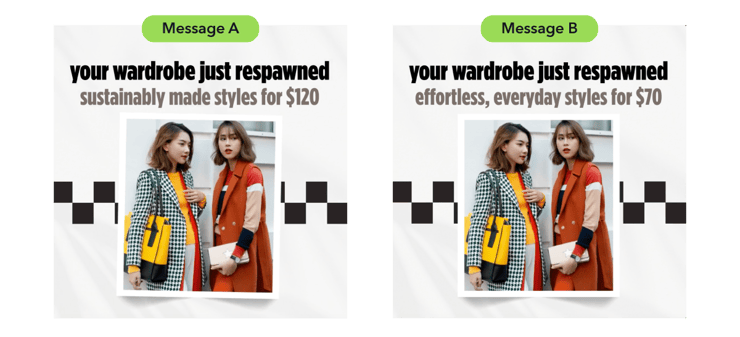
Consumers had no idea they were part of a test and scrolled through their feeds as they normally would. We measured click-through behavior as a real-world signal of purchase intent.
Here’s the say-do gap we found
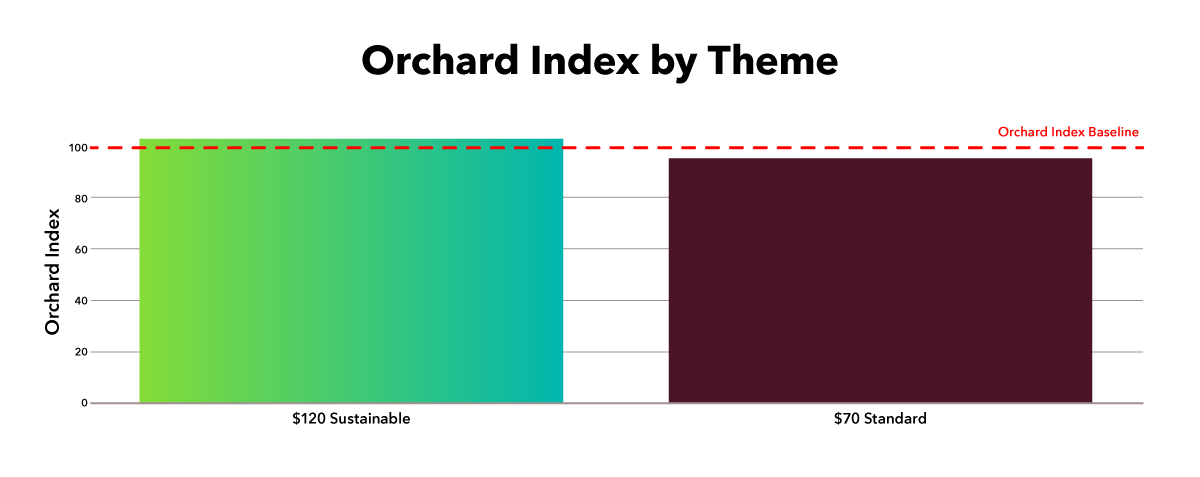
Despite strongly stated preferences for sustainable brands, our fashion experiment split the room.
80% of Gen Z consumers say sustainability influences their purchase decisions — but in a live feed, engagement split almost 50/50 between the sustainability-led message and the value-led alternative. That’s a 30% gap between what they say and what they actually do.
Why the gap exists and what it tells us
A gap this size is exactly the kind of signal that makes behavioral testing worth running, and a good reminder of where surveys have limits.
Surveys live outside the moment of choice. There's no price tag, no competing content, no split-second trade-off. When you ask someone directly whether sustainability matters to them, they're likely to say yes because it reflects their aspirations. That's social desirability bias, and it's one of the reasons behavioral testing exists.
Surveys struggle to predict what actually wins at the moment of choice. In a live feed, the dynamic shifts. Consumers are weighing the value, cost, relevance, and personal benefit in real time, and even deeply held values have to compete. Sustainability is a powerful long-term brand signal, but at the moment of choice, it doesn't always win.
What this means for brands
For brands investing in sustainability positioning, this finding is a prompt to go deeper.
Is the message landing the way you think it is? Does it hold across categories, consumer segments, and price points? Which specific claims (e.g. materials, ethical sourcing, environmental impact) actually stop the scroll?
And perhaps the most commercially important question of all: How do you convert consumers who care about sustainability but default to value at the moment of choice? The answer lives in the gap itself. Understanding what’s driving the disconnect — whether it's price sensitivity, messaging, or lack of trust in sustainability claims — is what turns a 30% gap into a growth opportunity.
The say-do gap shows up everywhere once you start looking, and it has real consequences for brands making messaging and investment decisions based on what consumers say they'll do. Over-indexing on stated preferences means risking budget on messages that feel right but don't convert, and missing the real decision drivers at the moment of choice.
Those are the questions behavioral testing is built to answer. Orchard tests ideas in the wild — putting real messages in front of real people in real feeds, without them knowing they're part of a test. That's where the gap between say and do becomes something you can actually act on.